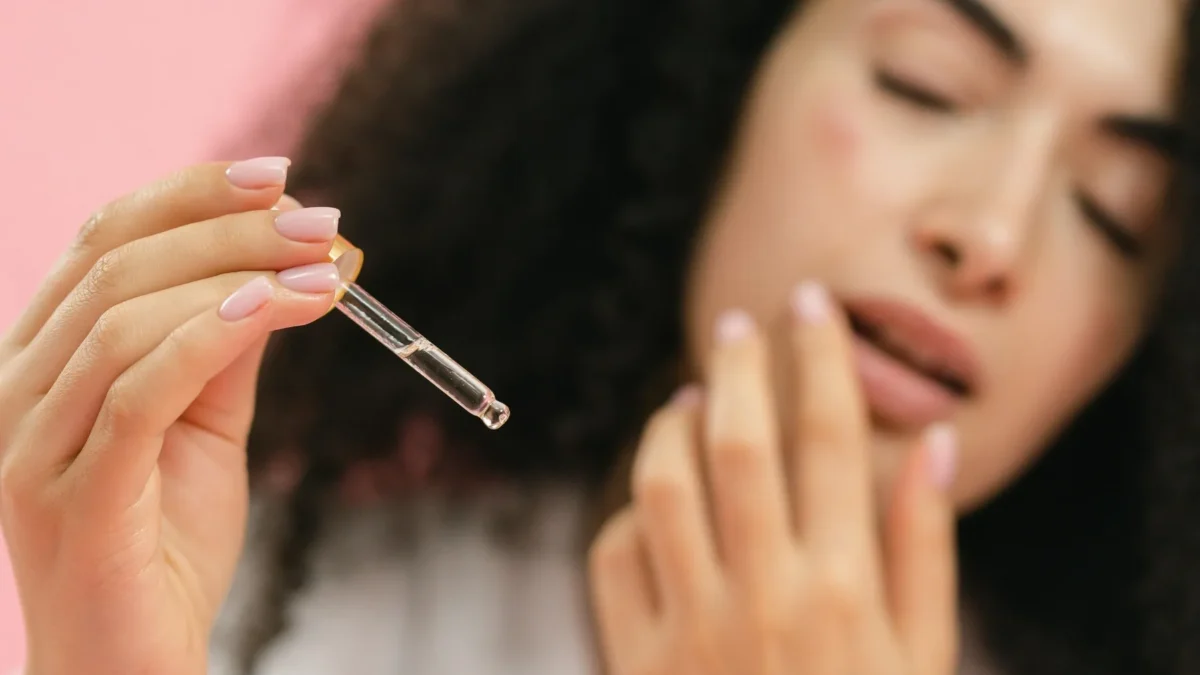
Hyaluronic acid holds up to 1,000 times its own weight in water. That fact gets cited on every product label, in every brand video, in every beauty editorial. It’s true. It’s also the least interesting thing about how it works.
Key Takeaways
High molecular weight HA hydrates the surface. Low molecular weight HA penetrates deeper and can stimulate collagen synthesis. Apply to damp skin, seal with a moisturiser. Sodium hyaluronate (the salt form) penetrates slightly better than HA itself.
Molecular Weight Changes Everything
Hyaluronic acid is a glycosaminoglycan – a long sugar-chain molecule. It exists naturally in the skin, connective tissue, and synovial fluid. But not all hyaluronic acid behaves the same way. Molecular weight is the variable that controls where it goes and what it does.
High molecular weight HA (over 1 million Daltons) is too large to penetrate the skin. It sits on the surface, forms a film, reduces transepidermal water loss, and provides immediate surface hydration. This is what gives the instant smoothness and plumpness you notice right after application.
Low molecular weight HA (under 50,000 Daltons) can penetrate into the upper layers of the dermis. Once there, it interacts with the extracellular matrix and, at sufficient concentrations, can stimulate fibroblast activity and collagen synthesis. This is a longer-term, structural effect rather than surface hydration.
Sodium hyaluronate is the sodium salt form of hyaluronic acid. The molecule is slightly smaller, which improves skin penetration marginally compared to pure HA. Most products use sodium hyaluronate rather than hyaluronic acid itself, though both are commonly marketed under the same name.
Why Application Method Matters
This is where a lot of people go wrong. Hyaluronic acid is a humectant – it draws moisture toward itself from its environment. Applied to dry skin in a low-humidity environment, it can pull moisture from the deeper layers of the skin upward and outward. This is the opposite of hydration – it’s actually drying.

Apply HA to damp skin – right after cleansing, while the skin still has surface moisture. Then seal with a moisturiser or facial oil to slow evaporation. This traps the water HA has attracted and keeps it in the skin rather than letting it evaporate into the air. The difference in results between this approach and applying HA to dry skin is significant.
HA vs Sodium Hyaluronate vs Hydrolysed HA
The ingredient list distinction matters. Hyaluronic acid and sodium hyaluronate are often used interchangeably in marketing but behave slightly differently. Hydrolysed HA has been enzymatically broken down to very small fragments, giving it the deepest penetration but also reducing its surface film-forming ability. Multi-weight formulations – products that include different molecular sizes – theoretically cover all three layers: surface film, mid-layer hydration, and deeper dermal interaction.
The Polyglutamic Acid Comparison
Polyglutamic acid (PGA) is a newer humectant derived from fermented soybeans that has received significant attention in recent years. In some studies, PGA outperforms HA in surface hydration because it forms a stronger film. It also inhibits hyaluronidase, the enzyme that breaks down the skin’s existing HA, which is a unique mechanism HA itself doesn’t have. The two work well together – PGA’s film-forming and HA-preservation properties complement HA’s multi-depth hydration.
HA production in the skin naturally declines with age – significantly by the mid-30s. Topical application doesn’t fully compensate for this, but it addresses the surface and upper-dermal components of the deficit. For the deeper structural loss, ingredients that stimulate fibroblast activity – retinoids, peptides, vitamin C – are the better long-term tool.
Related Articles
The Full Benefits of Niacinamide, Backed by Research
Niacinamide works through several independent mechanisms - brightening, barrier repair, sebum reduction, anti-inflammation. Here is what each one actually does and at…
What Retinol Actually Does to Your Skin
Retinol is the most evidence-backed anti-ageing active available without a prescription. Here is the mechanism, the conversion pathway, and what the research…
Leave a Reply